
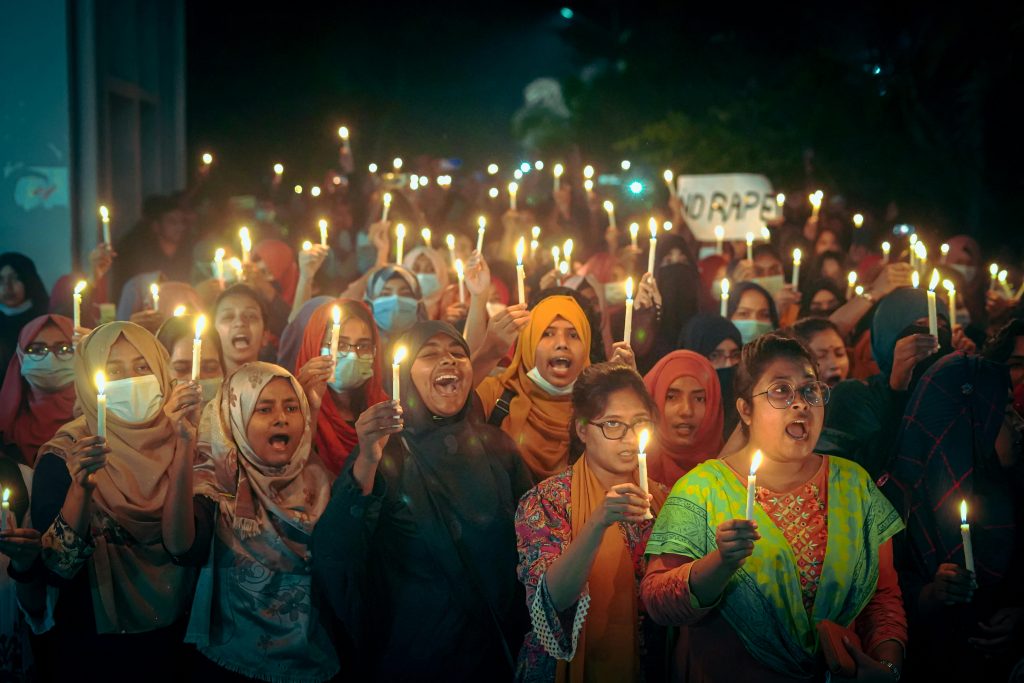
The past year has been marked by a deepening assault on human rights, democracy, and the rule of law. Across the world, violence, repression, and impunity have accelerated, while the systems meant to protect civilians and uphold international norms have continued to erode.
The world watched in horror as Israel’s military campaign in Gaza caused catastrophic loss of life and infrastructure, amid credible allegations of genocide. Elsewhere, conflicts in Ukraine, Sudan, the Democratic Republic of the Congo, Myanmar, the Sahel, and beyond continued to trap millions in cycles of fear, loss, and displacement. And COP30 failed to deliver the binding commitments and systemic shifts required to confront the climate crisis.
At the same time, civic space shrank further, with growing numbers of people living under governments that criminalise dissent and attack those who speak out. State capture, AI-amplified misinformation, and corruption weakened human rights, the rule of law, institutional trust, and press freedom.
These pressures were compounded by political decisions that weakened already fragile systems of international solidarity. In the United States, the Trump administration dismantled USAID and attacked foundations and institutes furthering peace and democracy, while several European governments slashed foreign aid budgets.
These moves stripped resources from programmes that support human rights defenders, independent media, and grassroots movements, and seriously undermined many of the organisations working to keep them safe. The result has been immediate and devastating for communities already under strain from interlocking systems of persistent stress: ecological, economic, digital, emotional, and political.
Taken together, these trends point to a world in which power is increasingly exercised without accountability, and those working for rights and justice are left more exposed than ever. Safety and resilience are now foundational to social change. It is within this context that our work takes place. Open Briefing has become a vital part of the infrastructure enabling defenders and movements to act safely, effectively, and with care.
Surging demand
Demand for trusted, rigorous, and integrated security and wellbeing support grew sharply in 2025 – particularly for organisations able to respond quickly and at scale.
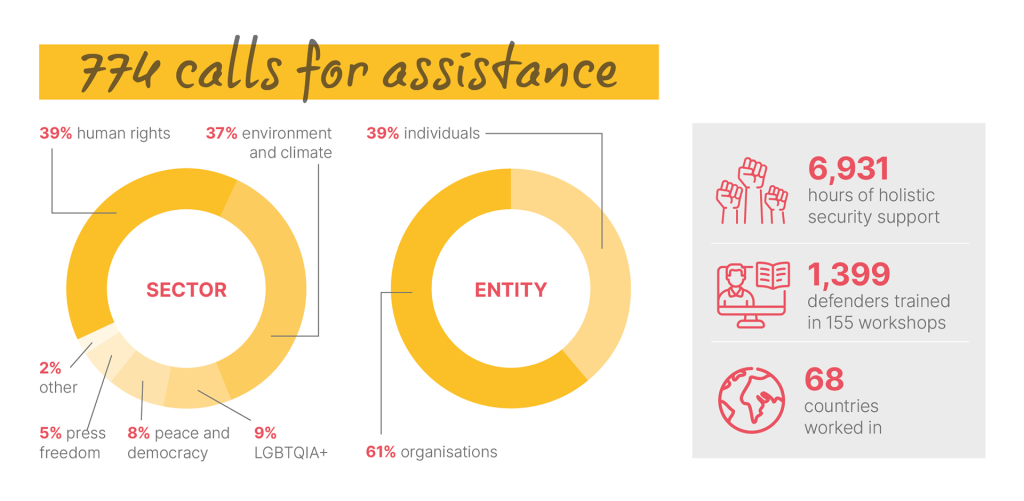
Open Briefing received 774 calls for assistance from grassroots activists, community groups, and social movements at risk. This represents a six-fold increase over five years, and our team is now responding to around 15 new cases every week.
Many of these cases are complex – featuring intersecting physical, digital, and psychological harms – and high-risk, involving highly capable adversaries acting with impunity.
We are holding this responsibility with care – for the people we support, and for the team and partners who make this work possible – knowing that protection must itself be sustainable.
Despite the challenges, we continue to provide timely, compassionate, and highly effective support. As an LGBTQIA+ rights defender in Nigeria reflected:
“Open Briefing never disappointed. Even when threats emerge, we are now strong enough to tackle them. We are deeply thankful to the Open Briefing team. You are truly passionate about the work you do.”
Over the course of the year, we supported organisations and activists at risk in at least 68 countries across the world, underscoring the global scale of the pressures facing civil society. The largest numbers of requests for assistance came from Kenya, Uganda, the United States, DR Congo, and Mexico.
Risk exists wherever people challenge unaccountable power. More than three-quarters of our cases came from the global majority, with demand concentrated across West, Central, and East Africa; Latin America; and West Asia. At the same time, a significant share came from the global minority – particularly North America and Western and Southern Europe – reinforcing that threats to civic space cut across regions and contexts, as demonstrated by the United States’ slide towards authoritarianism.
Real impact
We delivered nearly 7,000 hours of mentoring and capacity-sharing last year and trained 1,400 at-risk activists in 155 holistic security workshops. This marks a significant increase on previous years. We also complemented remote accompaniment with in-person support more frequently, operating alongside communities and movements in Brazil, Ecuador, Peru, Colombia, Cameroon, Kenya, South Africa, the United Kingdom, Indonesia, and elsewhere.
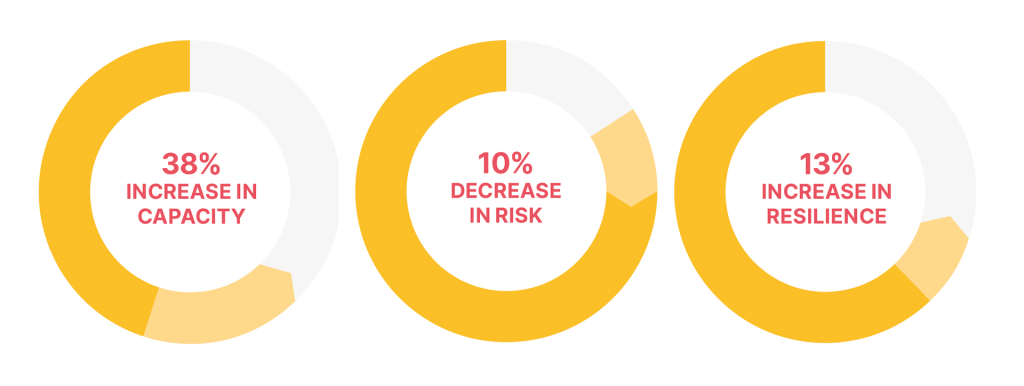
Our support delivered clear, measurable impact. In surveys conducted before and after our work together, defenders and organisations reported a 10% reduction in perceived risk and a 38% increase in capacity to manage that risk. Self-reported resilience also rose by 13% following our engagements. Taken together, these shifts indicate that partners and clients felt better equipped to navigate the challenges they faced during an exceptionally difficult year. This conclusion was reinforced by an external impact evaluation of our work, which found that:
“The most consistent outcome is that people and organisations continued operating where they might otherwise have paused, withdrawn, or collapsed.”
Feedback on our support was highly positive, with a median approval rating of 90%, underscoring appreciation for both the support itself and the way it was delivered.
Over the year, we worked in solidarity with those fighting for human rights and social justice, demanding climate action, defending their land and rivers, exposing corruption and reporting the truth, striving for peace and democracy, and championing reproductive justice, women’s rights, and the rights of LGBTQIA+ people. We are privileged to share some of their stories in this report.
While most of our work is behind the scenes, we were invited to support several high-profile initiatives last year, including:
• Collective protection and safeguarding support for Indigenous, land, and environmental defenders during the People’s COP and the People’s Tribunal against Ecogenocide in Belém, Brazil, alongside the official COP30 climate summit.
• Risk advisory for the head of a national network coordinating prominent legal and advocacy challenges to government attacks on nonprofits in the United States, amid organised and gendered harassment and escalating political pressure.
• Security and wellbeing support for recipients of the Right Livelihood Award and the Goldman Environmental Prize – known as the Alternative Nobel and Green Nobel – as well as newer partnerships with the Climate Breakthrough Award and Iris Prize.
Strength in diversity
To meet growing demand for our support, we have carefully expanded our organisation over the past year to 47 staff and consultants in 19 countries across Latin America, East and Southern Africa, and West and Southeast Asia, as well as Europe and North America. We focused this growth on strengthening our digital risk and resilience team and expanding our in-country presence in Brazil and the United States. We also established a development board to support our long-term sustainability.
We have centred diversity, equity, and inclusion throughout this process. Women now make up two-thirds of our team, including within our senior leadership, while half of our colleagues are from minoritised racial, ethnic, and religious communities.
We support our staff with fully funded coaching and counselling, comprehensive healthcare for them and their families, enhanced annual leave, gender-neutral family leave, and provision for menstrual health, menopause, and gender transition. We also provide additional paid leave for colleagues taking part in climate and civic action.
These commitments shape how we work and reflect who we are. We are both experienced professionals – risk advisers, technologists, and psychologists – and human rights defenders, activists, and humanitarians. Our global reach and breadth of lived experience are central to how we work and why our support is so trusted.
Partnerships
Open Briefing is also part of a larger protection ecosystem, where collaboration and complementarity are key. While the funding attacks and philanthropic uncertainty that marked last year threatened that ecosystem, our team rose to meet the moment and played a larger role than ever before.
We served on the steering committee of the Building Responses Together network and as members of the Alliance for Land, Indigenous and Environmental Defenders (ALLIED), the Vuka! coalition, CIVICUS, the NGO Information Sharing and Analysis Center (NGO-ISAC), and the security working group of the Defenders in Development campaign.
We led a series of dialogues with Vuka! to map and better understand wellbeing across different cultures, and to inform decolonised approaches to wellbeing. We partnered with ALLIED and KERI to strengthen the mental health and psychosocial support ecosystem for Indigenous, land, and environmental defenders in the Philippines. We also partnered with two regional protection hubs in Southeast Asia – Exile Hub and Tifa Foundation – supporting them through capacity-sharing and mentoring, while learning from their local knowledge and experience.
We delivered workshops and clinics at the People’s COP in Brazil, the East Africa Philanthropy Network Conferencein Kenya, Strengthening Our Security with Proética and Rainforest Foundation Norway in Peru, the Hearth Summit in Slovenia, Global Gathering in Portugal, ActionAid’s People Power Conference in Denmark, and the #SaferToBeMe Summit in the United Kingdom. We also joined colleagues from around the world at RightsCon in Taiwan.
Through these partnerships, we help spread good practice, learn lessons, and reduce duplication – strengthening collective protection capacity at a time of severe resource constraint.
Consultancy and advisory
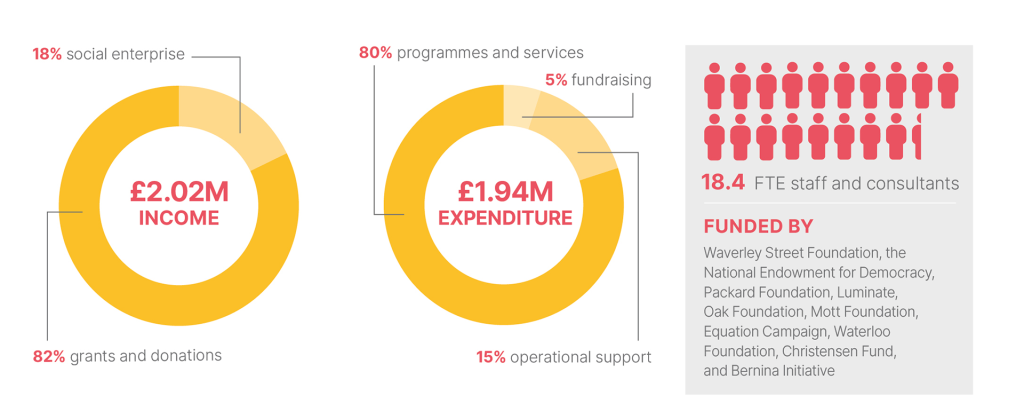
As both a mission-driven nonprofit and a social impact consultancy, Open Briefing operates at every level of civil society. Nearly a quarter of our income last year was generated through professional consultancy and advisory services, strengthening our financial resilience and enabling us to reinvest unrestricted resources into our frontline protection work.
Our clients ranged in size and scale and included leading nonprofits and foundations, such as the 11th Hour Project, Global Greengrants Fund, and the Human Dignity Trust. Several organisations also trusted us as their retained provider, including Global Witness, the Global Initiative Against Transnational Organized Crime, and the World Organisation Against Torture (OMCT), reflecting long-term partnerships built on effectiveness and accountability.
Increasingly, we worked alongside clients to strengthen their own risk management and staff wellbeing, and to help them think through and meet their duty of care to grantees and grassroots partners – extending protection beyond individual organisations. As Synchronicity Earth noted:
“We feel better prepared to support partners facing security risks through our partnership with Open Briefing. Their ability to listen and adapt, as well as the expertise and knowledge of the sector they bring, has made them an incredibly valuable partner.”
Our community of donors
Open Briefing was not immune to the funding cuts that hit civil society in 2025. We are deeply grateful to our funders for recognising the vital role holistic security support plays in resilient civic action, including Waverley Street Foundation, Luminate, the National Endowment for Democracy, Packard Foundation, Oak Foundation, and Mott Foundation.
We are also pleased to welcome new donors, including Wellspring Philanthropic Fund, Equation Campaign, Waterloo Foundation, Christensen Fund, and Bernina Initiative.
Together with our circle of individual supporters, these partnerships sustain our work and reflect strong confidence in both our impact and our stewardship as we enter our 15th year.
A defining moment
The year ahead is crucial. Civil society must challenge the repressive governments, corrupt corporations, organised criminal gangs, and the radical right that have shaped this permacrisis. It will be difficult. The risks are real.
But we will prevail because we have two things they do not: hope and community. Hope gives rise to ideas. When shared, those ideas become stories that inspire and connect. When these narratives meet collective action, they reshape power and make lasting change possible.
Open Briefing exists to keep that hope alive and to protect the people and movements who turn it into action. With your continued support, we can renew and extend this protection infrastructure at a time when it matters more than ever.