
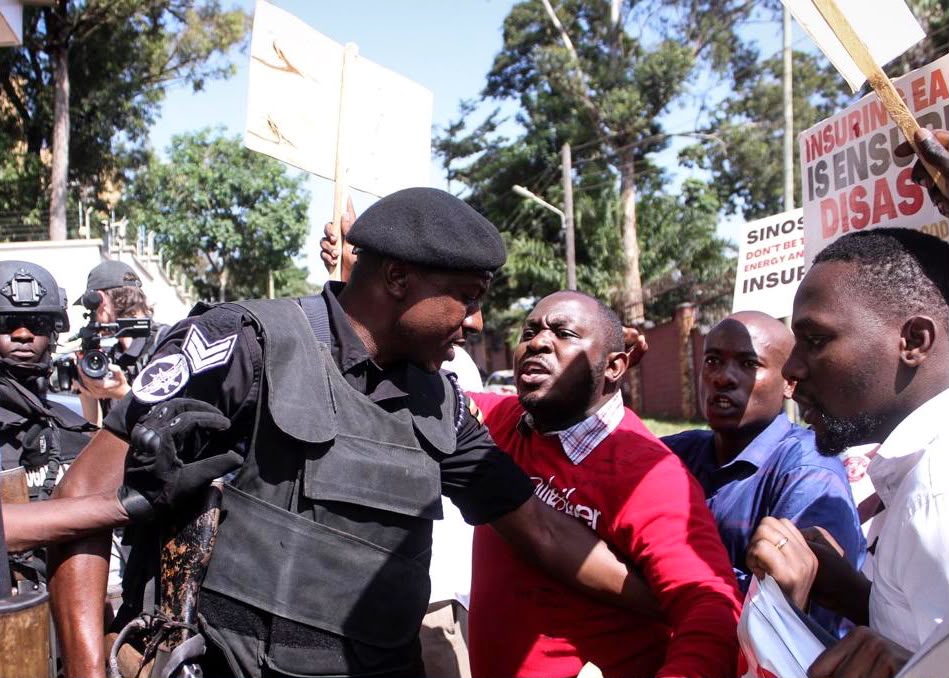
For communities and environmental defenders in Uganda and Tanzania, speaking out against East Africa’s largest extractive project increasingly carries serious risks.
The East African Crude Oil Pipeline (EACOP) will stretch nearly 900 miles, cutting through farmland, sensitive ecosystems, and critical water sources. Communities and campaigners have long raised concerns about displacement, inadequate compensation, threats to livelihoods, environmental damage, and climate impacts.
Among those speaking out is Bob Barigye, a Ugandan environmental and human rights defender whose family was directly affected by the project. As a leading figure within the #StopEACOP campaign, Bob has helped amplify the concerns of impacted communities and advocate for justice and accountability.
As resistance has grown, so too has pressure on those defending affected communities. Community organisers, journalists, and defenders have faced harassment, intimidation, surveillance, and arbitrary arrest, making protection support essential to sustaining long-term organising against powerful political and economic interests.
Against this backdrop, Open Briefing worked with Bob and the #StopEACOP campaign in Uganda to strengthen their safety capacity and build collective protection strategies.
From displacement to resistance
Like many living along the pipeline route, Bob’s family experienced displacement and inadequate compensation for the loss of their land, home, and community. Forced relocation fractured family life, separating Bob from his siblings and disrupting long-standing support networks.
These early experiences shaped Bob’s decision to speak out against EACOP during his time at university: “I saw how a local water source was being destroyed and decided to write a petition to our local authority with my university colleagues. When we delivered it, we were met with intimidation. We were told that there wasn’t anything we could do – that the government should never be challenged. This didn’t sit well with me. The people in our villages should have a voice. So we went back and started mobilising more people.”
Since then, Bob has become a key figure within the #StopEACOP campaign, organising peaceful civic action to raise awareness of impacts on communities and challenging financial backing for the project.
But this work has come at a significant cost.
Criminalising dissent
In April 2025, Bob was one of the KCB11 — a group of climate activists arrested in Kampala after attempting to deliver a petition to Kenya Commercial Bank expressing concern about the bank’s potential involvement in financing EACOP.
What began as a peaceful act of protest escalated into arbitrary arrest, police beatings, prolonged detention in inhumane conditions, and months of legal uncertainty and psychological pressure. Bob had already been arrested numerous times for organising peaceful discussions and protests. But this experience felt different.
“We were held in a maximum-security prison alongside people convicted of murder, rape, and terrorism,” Bob explained. “For over 90 days, we were denied bail and hearings were delayed. The psychological pressure felt severe and deliberate. One of our members experienced the death of their child while in prison — they were not even allowed to attend the funeral.”
Bob’s experience reflects a broader pattern: the growing criminalisation of those peacefully challenging powerful extractive interests and advocating for land rights and environmental protection.
From individual security to collective resilience
The KCB11 were released on bail after spending more than 90 days in detention. Following his release, Bob continued to face harassment and surveillance, making it clear that his security could no longer be ignored.
Bob worked with Open Briefing safety and security consultant Dan Williamson on a tailored programme of remote accompaniment and training designed to strengthen his security, risk awareness, and organising practices. Together, they identified adversaries and threats, mapped allies, and developed plans to reduce immediate risks and prepare for future incidents.
“I felt comfortable working with Dan,” Bob shared. “He was always available when I needed support.” The impact was significant: “I can now detect surveillance, assess risks, and know who to ask for support. I became a better defender through this training with Open Briefing.”
The work also shifted Bob’s understanding of risk within the #StopEACOP campaign. “When you’re working with other defenders, everyone’s security is connected,” he explained. “Without knowledge of security threats, one person can become a risk to the whole movement. If their device is seized or searched, it can affect the safety of my family.”
Across the network, these vulnerabilities were becoming clear. Meetings were monitored, mobilisation plans exposed, and activists followed or arrested. “Sometimes we would plan a protest and before we carried it out, the security forces already knew,” Bob said. “Not because someone informed them intentionally, but because there was a loophole in the security practices of some defenders.”
In response, Bob and Dan organised an in-person training for defenders creating space for collective learning, practical exercises, and trust-building.
“What was really helpful was working together,” Bob explained. “Dan helped us go through practical scenarios so we could share ideas and develop solutions together.”
Grounded in defenders’ lived experiences, the workshop also drew on Bob’s role as a trusted movement leader who could translate security practices into the realities of defenders’ daily work. “Dan could share practices and approaches, but because I had already been trained, I could explain how I use these tools in my work and life in the defender’s language,” Bob explained.
“The defenders hugely benefitted from Bob’s ability to create a trusted space and draw on his many years of activism,” Dan shared.
Sustaining activism under continued pressure
For many defenders, the training reinforced a sense of solidarity with movements facing similar pressures globally.
“Through this work with Open Briefing, we learnt that this isn’t only happening here in Uganda,” Bob said. “There are people in other countries protecting their land and communities and facing similar threats. Knowing there are people who care about our lives and our work was deeply motivating for us as defenders.”
Today, Bob says the training continues to shape how he and others in the #StopEACOP coalition approach their work.
“After the training the defenders were better equipped to secure themselves, those around them, and their families. I expect that they are stronger activists – more informed about the risks they face,” he explained. “For me, before any activity, I now stop and assess the risks. Working with Open Briefing has been life saving.”
For frontline defenders resisting powerful political and corporate interests, this kind of tailored, relational support can make the difference between burnout and resilience, isolation and solidarity, vulnerability and collective protection.
“Working with Bob, the KCB11, and the wider #StopEACOP movement really showed the power of collective protection,” Dan reflected. “It not only delivers more relational, integrated security, but also catalyses a sense of community and shared hope among defenders.”
As threats against environmental defenders continue to grow globally, the experiences of Bob and the #StopEACOP movement highlights an urgent reality: protecting defenders is not only about responding to immediate threats, but also about building the safety, solidarity, and collective resilience needed to sustain long-term organising against powerful interests.
Access further support and get involved
Open Briefing provides fully-funded assistance to activists and organisations facing threats related to their work. You can request support through our responsive assistance mechanism.